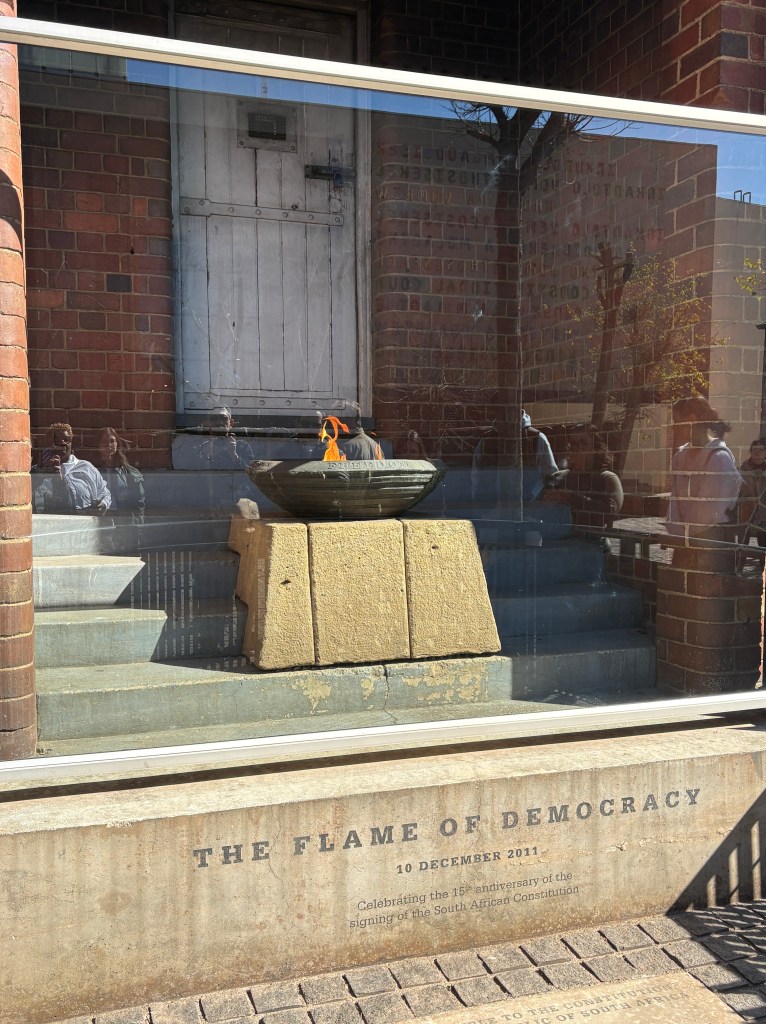
The most emotionally resonant museum exhibition we went to was “Number Four” at Constitution Hill. Today, Constitution Hill is the site of the South African Supreme Court, dedicated to upholding the civil rights outlined in the 1997 Constitution. However, for over one hundred years, this point of elevation served as a prison.
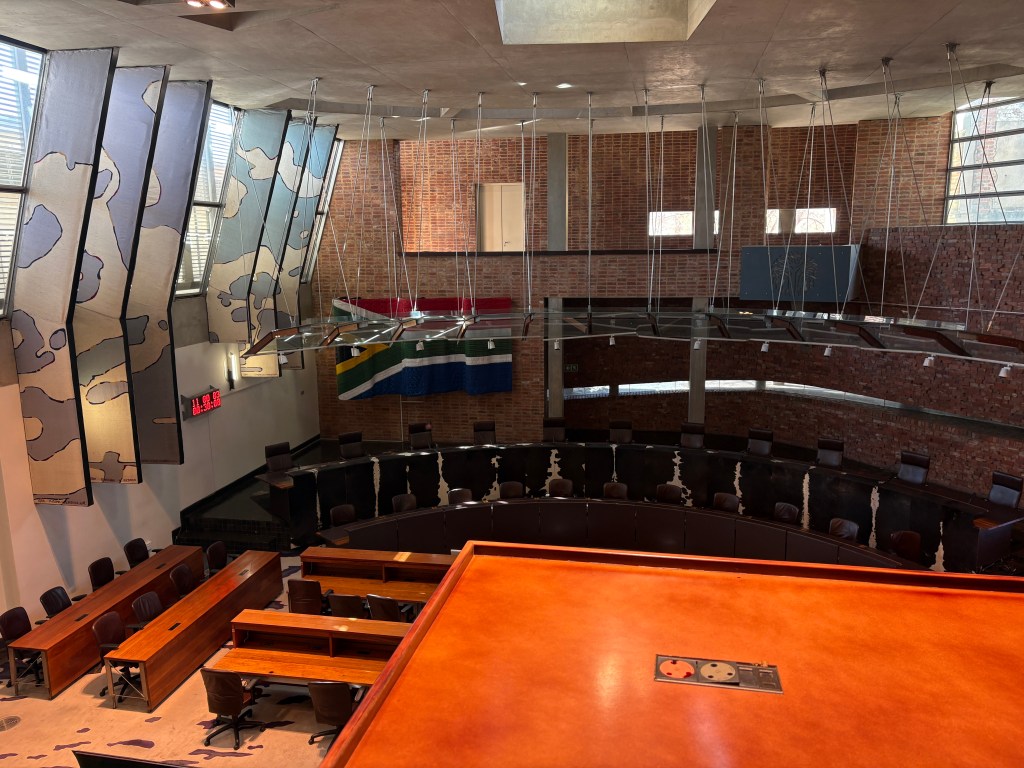
In the late 1800s, it was controlled by the British, who imprisoned Afrikaaner and Dutch military rivals. In 1902, the British relinquished control and the ‘Hill’ fell into the hands of the Afrikaaners as they became the ruling party of the country. From then until the fall of Apartheid, Constitution Hill was a ruthless prison for Black men and women, as well as non-Black South Africans who were found guilty of supporting the anti-Apartheid cause. “District Four” itself has become the most notorious prison block of the compound due to the level of human rights atrocities committed there.
We spent the morning walking through District Four, much of which has been historically preserved. The men slept on itchy gray blankets, under deteriorating walls, with no window light or electricity. They were forced to clean the toilet themselves by stomping their feet. Many were sent to work for construction companies, and their only form of compensation was phuzamandla; a mealie drink meant to sustain effort. Gangs controlled prison life through statutory rape of the underage inmates. Wardens would take turns flogging inmates, with a doctor present only to ensure they did not accidentally kill anyone. Needless to say, it was an incredibly heavy and emotional tour, yet absolutely necessary to understand the atrocities of Apartheid.
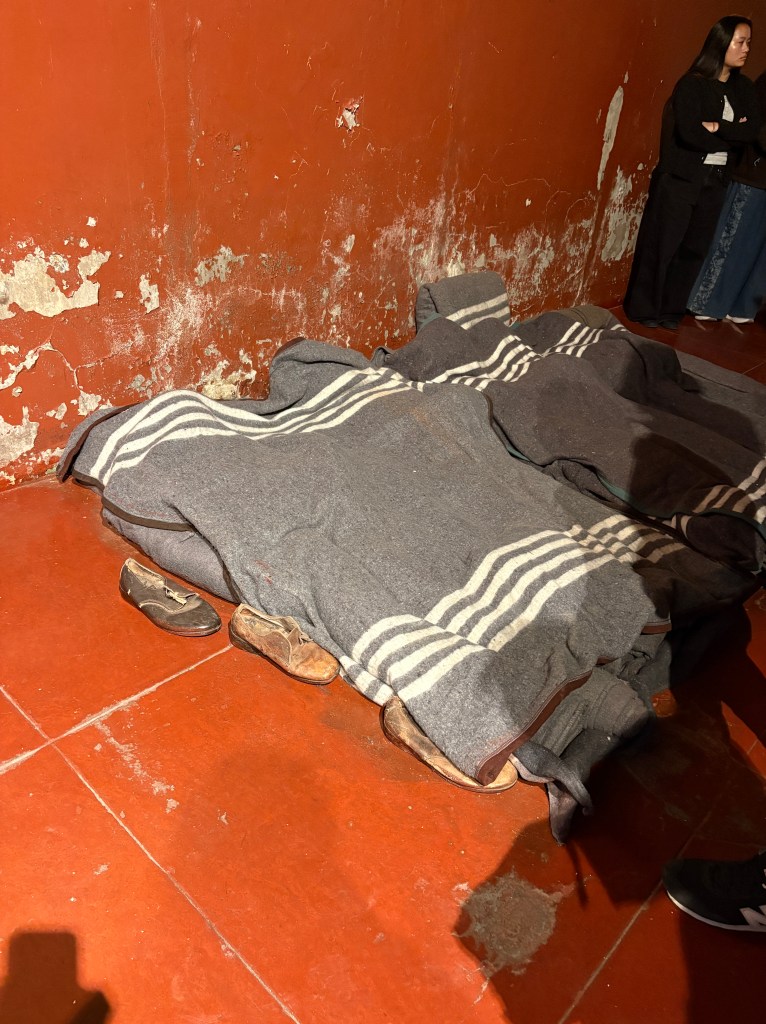
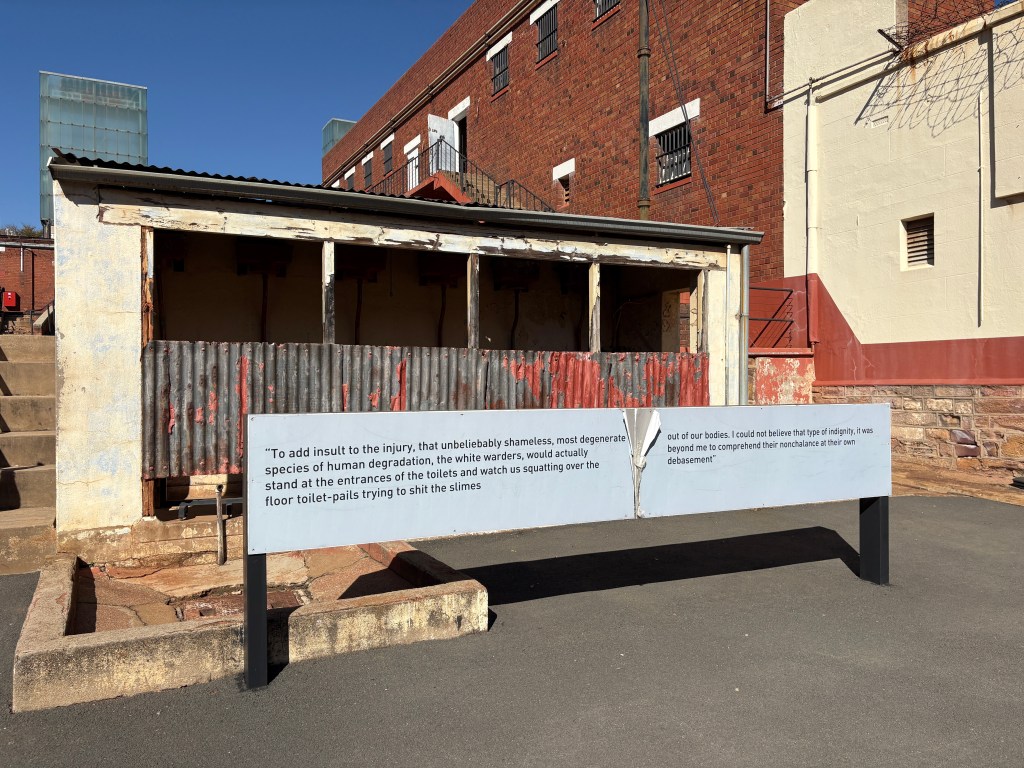
The exhibit that stuck with me the most was the identification of former inmates. This exhibit was set up in a former bunk room, where these inmates would have stayed. There were plaques lining the walls with photographs of inmates (all Black men) and a description of their crimes. One man named Solo Simon Gama was imprisoned for five years for not having his pass while leaving his job site. This was one of the most common reasons Black South Africans were detained and imprisoned during Apartheid.
Gama said, “A week will never go by without me getting arrested. I grew up in jail.”


Leave a comment